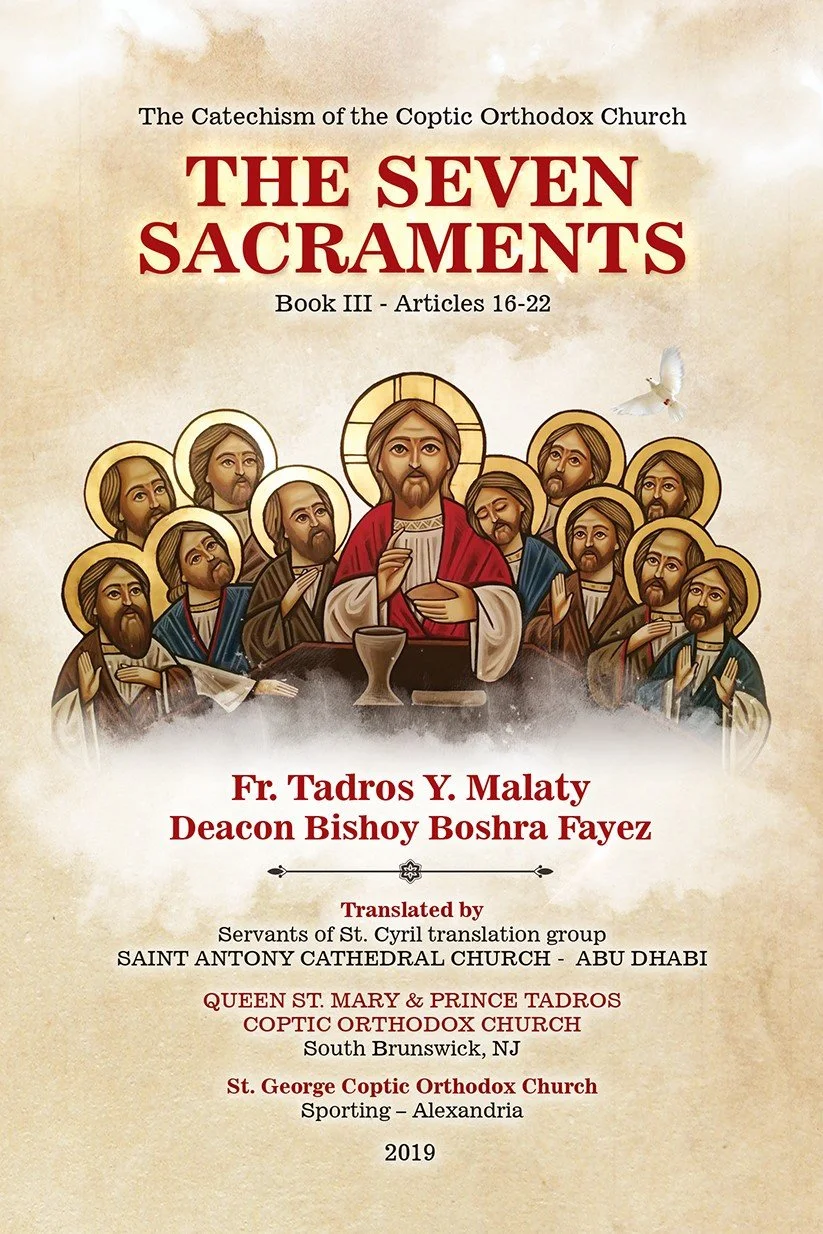
Catechism of the Coptic Orthodox Church - THE SEVEN SACRAMENTS: Book 3 - Articles 16-22
Every believer can relate to this Catechism series, regardless of his nationality. He is about becoming a man of God and His beloved Son, so that his heart may be filled with love for all humankind, praying for everyone, even to those who persecute the Church. It invites us to enjoy the heavenly experience, righteousness in faith and growth in the knowledge of our Lord Jesus Christ.
Our teacher St. Paul talks about “the mystery that was kept secret since the world began” (Cf. Rom 16:25). He refers to God’s work in the New Testament, Who fulfilled the mysterious Heavenly plan so that the believer would restore the loving relationship and openness towards God’s work. Which was accomplished through the crucifixion of Jesus Christ, His resurrection and His grace upon His Church, to prepare her, a heavenly bride, and attain the eternal glories in His Second Advent.
The Early Church Fathers focused on “the Church mysteries” which prepare God’s people and all the members through Baptism, to enjoy their adoption of God, the dwelling of the Holy Spirit in them to become a temple of God where the Holy Spirit dwells through the Holy Chrismation. We are continually washed from sins through Repentance and Confession and united with Christ through the Holy Eucharist. We receive the spiritual and physical healing through the Unction of the Sick and building the church of our homes through the Holy Matrimony. Ultimately, all these mysteries are realized in Christ Jesus through the Sacrament of Priesthood.
During the first thousand years after the resurrection of our Savior and the descending of Holy Spirit on the day of Pentecost, the Church was practicing the Holy Sacraments, unoccupied by their actual number, for none of the believers doubted the work of God through them, but was delighted in God by them.
These sacraments reveal the church’s holy vision towards the body that was called into the unity with the soul in the heavenly glories, delighted by the new nature. This was clearly stated by the apostle in chapter fifteen of his first epistle to the Corinthians, for the body to share the eternal inheritance with the soul, as the believer will enter into the heavenly inheritance with all his being.
Fr. Tadros Y. Malaty