

The Book of Psalms – Volume. 1 Introduction
The Book of Psalms is the Church’s eternal prayer book: uniting heaven and earth, soul and body, suffering and glory. In this Patristic Commentary, the Psalms are presented as a living journey of the soul, shaped by the voice of Christ, the experience of the early Church Fathers, and the rhythm of salvation history.
This first volume introduces the structure, spirit, and depth of the Psalms, preparing to walk through each Psalm not only as prayer and poetry, but as prophecy fulfilled in Christ. Themes include:
The fivefold division of the Psalter and its spiritual meaning
The Psalms as the voice of Christ and the Body of Christ
Use of the Psalms in worship, repentance, and daily struggle
Insights from St. Athanasius, St. Augustine, St. Cyril, and more
How the Psalms heal, elevate, and form the inner life of the believer
📚 About the Series
The full commentary is published in seven volumes:
🔹 Volume 1: Introduction
🔹 Volume 2:Division 1 – Man and Salvation (Psalms 1–41)
🔹 Volume 3:Division 2 – The Church and Salvation (Psalms 42–72)
🔹 Volume 4:Division 3 – The New Temple (Psalms 73–89)
🔹 Volume 5:Division 4 – The New Earth (Psalms 90–106)
🔹 Volume 6:Division 5 – The Word of God (Psalms 107–150)
🔹 Volume 7:Psalm 151 – David overcomes Goliath
THE EPISTLE OF SAINT JAMES
The Epistle of James stands as one of the most practical and penetrating books of the New Testament: a call to a living, mature faith expressed through love, humility, and steadfastness. In this patristic commentary, shaped by the richness of the Coptic Orthodox tradition and the wisdom of the early Church Fathers, readers encounter James not merely as a letter but as a spiritual guide for authentic Christian life.
This volume reveals the depth of James’s teaching on:
Faith proven through works of mercy and righteousness
Endurance in trials and joy in testing
The power of speech, humility, and peace-making
True religion that cares for the weak and guards the heart
Prayer, confession, and healing within the life of the Church
The Epistle to the Hebrews
This volume offers a profound patristic commentary on the Epistle to the Hebrews, one of the most spiritually majestic and theologically rich books in the New Testament. Drawing from the Coptic Orthodox tradition and the insights of the early Church Fathers, this commentary unveils Christ as our High Priest, Mediator, and Eternal Sacrifice—the fulfillment of the Law, the Prophets, and the Temple itself.
With clarity and warmth, the commentary walks readers through every chapter of the epistle, highlighting:
Christ’s priesthood “according to the order of Melchizedek”
The superiority of the New Covenant over the Old
The call to spiritual maturity, endurance, and living faith
The connection between liturgy, sacrifice, and heavenly worship
The urgency of rejecting apostasy and clinging to hope
This book speaks not only to theologians and students of Scripture but to every believer seeking meaning, identity, and steadfastness in a world of distraction and trial. The words of Hebrews resonate with timeless relevance: “Today, if you hear His voice, do not harden your hearts.”
Through the voice of the Church Fathers, this commentary invites readers to ascend with Christ beyond the earthly veil, to behold the heavenly sanctuary, and to live as children of the eternal Kingdom.
The Book of ISAIAH – Volume. 4 The Holy Comforter through Salvation (Chapters 40-66)
This final volume in the Patristic Commentary on the Book of Isaiah brings the prophetic masterpiece to its majestic conclusion. Covering chapters 40–66, this section of Isaiah shifts from chastisement and judgment to comfort, renewal, and the vision of ultimate salvation. Through the voice of the prophet and the lens of the early Church Fathers, Isaiah now proclaims God as the Holy Comforter—the One who lifts, restores, and redeems His people.
Drawing from the Coptic Orthodox tradition and the writings of saints and patristic scholars, this commentary invites readers into a profound journey that includes:
The messianic prophecies of the Suffering Servant
The universal call to salvation extended to all nations
The spiritual promise of the New Jerusalem
God's covenantal love revealed as a healing force stronger than sin and exile
These chapters, often referred to as the Gospel of the Old Testament, contain some of the most frequently quoted and spiritually profound texts in all of Scripture—foretelling Christ’s redemptive work, the role of the Church, and the final hope of glory. The patristic commentary makes these eternal themes accessible, deeply theological, and personally transformational.
📚 Explore the Complete Series:
Volume 1: Introduction and Theological Foundations
Volume 2: The Holy Chastiser (Chapters 1–35)
Volume 3: The Holy Grantor of Victory (Chapters 36–39)
With this final volume, the Book of Isaiah stands as a unified message of holiness, judgment, and triumphant love—fulfilled in Christ and alive in the Church.
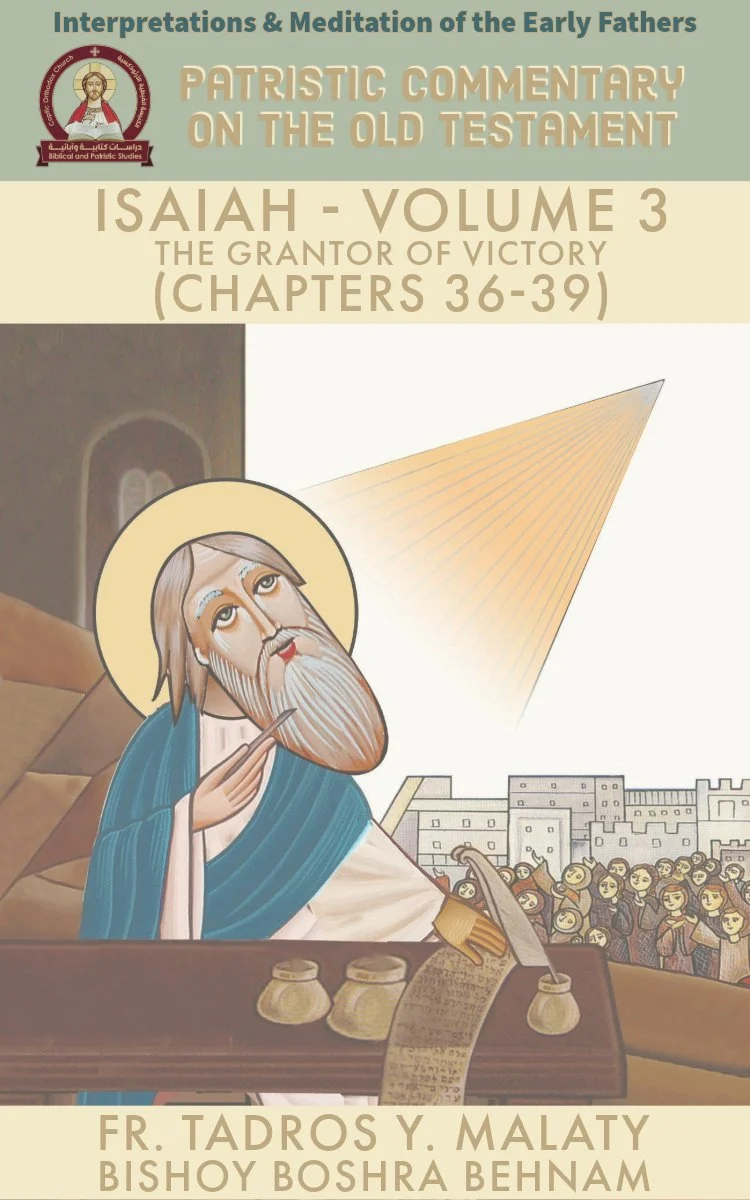
The Book of ISAIAH – Volume. 3 The Holy Grantor of Victory (Chapters 36-39)
This third volume in the Patristic Commentary on the Book of Isaiah examines a pivotal moment in the prophetic narrative, where historical drama, spiritual warfare, and divine intervention intersect. Covering chapters 36–39, this section presents the reign of King Hezekiah during the Assyrian siege—an era marked by both miraculous deliverance and tragic human weakness.
Through the eyes of the early Church Fathers and the Coptic Orthodox tradition, we encounter God not only as the Righteous Judge but as the Holy Grantor of Victory, who saves His people when they turn to Him in prayer and humility. This volume includes:
The psychological and theological drama of Sennacherib’s invasion
Hezekiah’s fervent prayers, healing, and miraculous extension of life
The profound lessons of divine rescue and human pride
How God's chastisement and mercy are intricately woven into salvation history
As with previous volumes, the commentary draws from the spiritual insight of saints like St. John Chrysostom, St. Athanasius, and the Desert Fathers, making Isaiah’s words alive for today’s reader—especially those facing spiritual battles, leadership challenges, or personal trials.
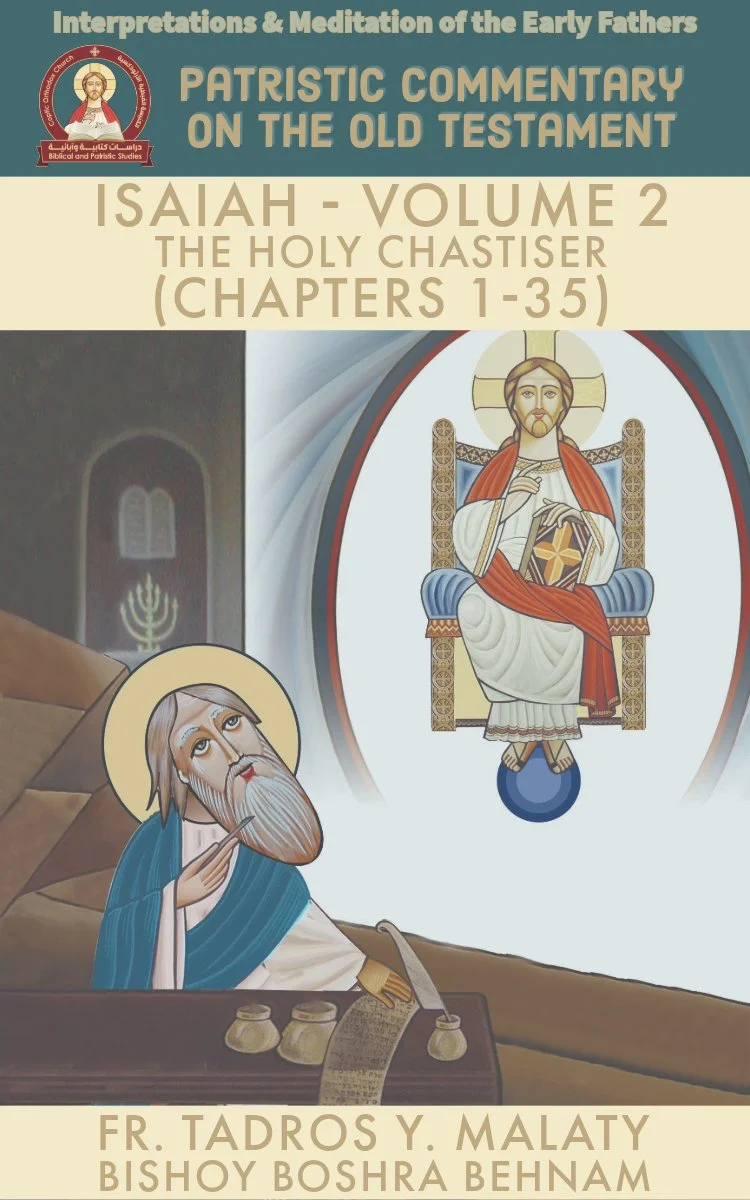
The Book of ISAIAH – Volume. 2 The Holy Chastiser (Chapters 1-35)
This second volume in the Patristic Commentary on the Book of Isaiah continues the journey begun in Volume 1, delving deeply into the prophet’s earliest messages—warnings of judgment, calls to repentance, and glimpses of redemption. Drawing from the wisdom of the early Church Fathers and the Coptic Orthodox tradition, this work reveals the richness of Isaiah's voice as both fierce reformer and tender intercessor.
Covering chapters 1–35, this volume illuminates:
God’s righteous judgment against hypocrisy, injustice, and idolatry
The spiritual decay of Judah and the prophetic call to return to holiness
The hope of a faithful remnant and the vision of a future kingdom of peace
Prophecies of the Messiah as the coming King, Judge, and Redeemer
Through patristic reflections, we understand how divine chastisement is a form of love, leading the soul back to God.
This book speaks powerfully to the spiritual struggles of today—where sin often hides behind religious ritual, and hope flickers in a broken world. Rich in theological insight, liturgical allusion, and pastoral application, this volume will inspire readers to see the prophetic Word as a living call to transformation.
📗 Also Available:
Start your journey with Volume 1: Introduction and Theological Foundations — where Isaiah’s life, message, and unity are introduced in light of the early Church.
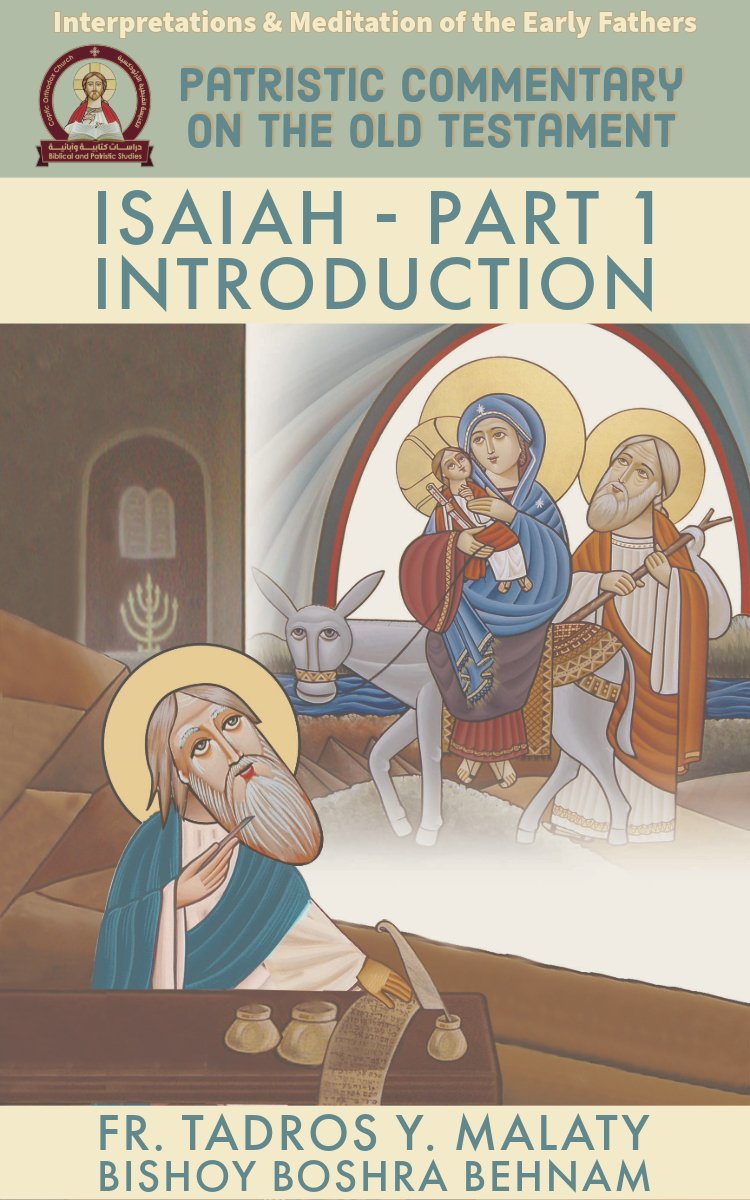
The Book of ISAIAH – Volume. 1 Introduction & Theological Foundations
That first volume in the Patristic Commentary on the Book of Isaiah opens the door to one of the rich and prophetically profound texts of the Old Testament. This Introduction is rooted in the Coptic Orthodox tradition and draws from the early Church Fathers, offering a panoramic view of Isaiah's life, message, and enduring legacy.
Far more than a historical overview, this volume presents Isaiah as both seer and evangelist—the prophet whose writing is called "The Fifth Evangelist" and whose words the early Church saw fulfilled in Christ's incarnation, passion, and resurrection.
Inside, you will explore:
The social, political, and religious climate of Isaiah's time.
The prophet's personal life, calling, and character.
A detailed look at the major themes of Isaiah's theology: holiness, sin, salvation, and the role of the Servant of the Lord.
How Isaiah's prophecies reveal the New Testament and the Church's liturgical life.
The unity of the book and modern critical divisions.
Whether you're a theologian, a student of Scripture, or a curious believer, this volume offers timeless insights that illuminate Isaiah's prophetic voice—not as ancient history but as a living call to repentance, hope, and divine glory.
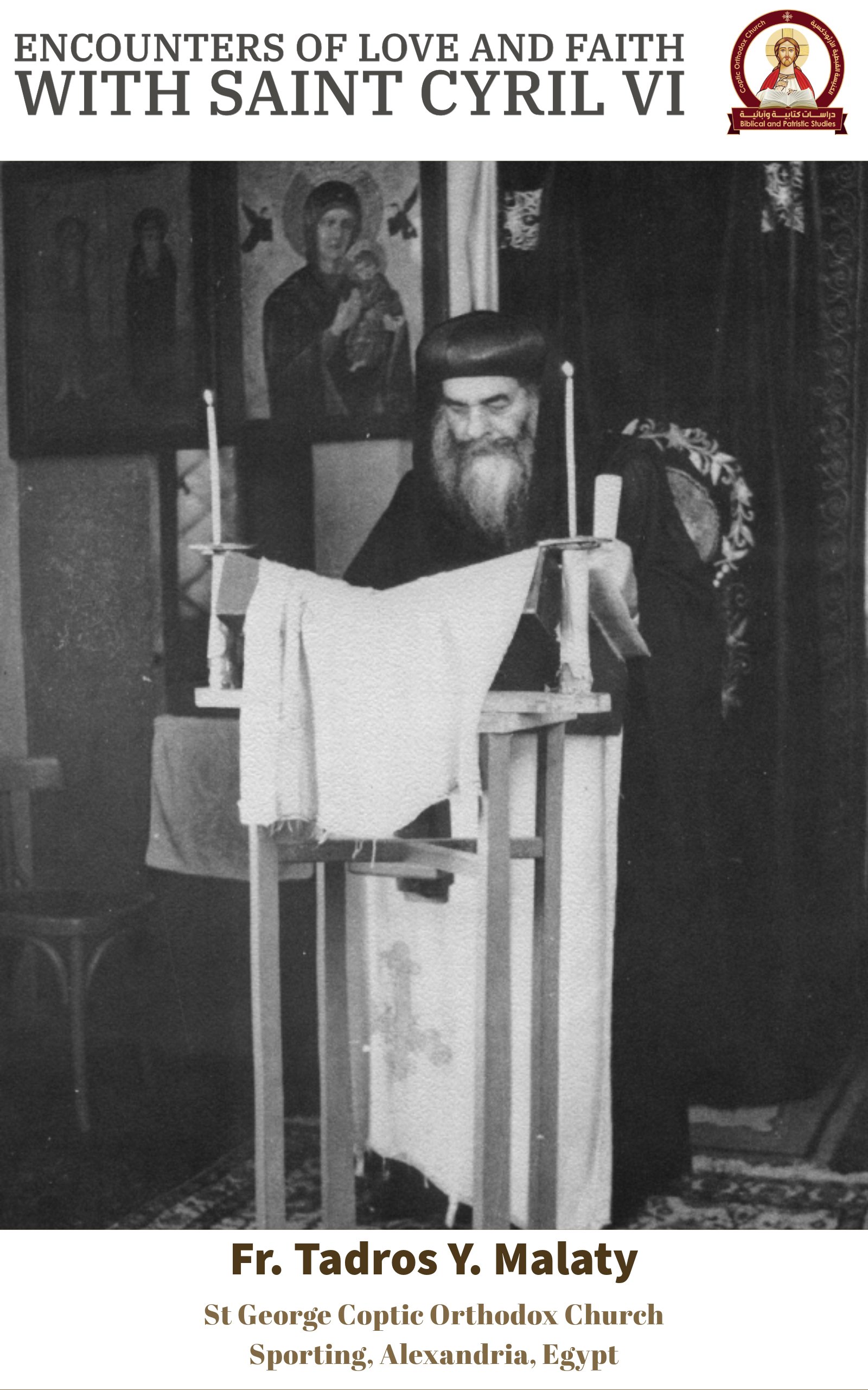
Encounters of Love and Faith with Saint Cyril VI: Stories of Love, Humility, and the Power of Prayer from Contemporary Men of God
Encounters of Love and Faith with Saint Cyril VI: Stories of Love, Humility, and the Power of Prayer from Contemporary Men of God
Dive into inspirational tales of faith and dedication with "Encounters of Love and Faith with Saint Cyril VI," a compelling booklet that illuminates the unique lives and actions of contemporary Coptic Orthodox Church figures, Anba Samuel, Father Saleeb Soryal and Father Matta El-Meskeen with saint Pope Cyril VI. That collection showcases the profound impact of living in Christ according to biblical teachings, emphasizing the undeniable power of prayer, love, and humility.
Through real-life narratives, readers are invited to explore the essence of Christian faith — the belief in the Holy Trinity of God the Father, His Son, and the Holy Spirit — and how it empowers individuals to navigate and overcome life's challenges. "Encounters of Love" vividly illustrates how these men of God, armed with unwavering faith and dedication, became beacons of peace, reconciliation, and hope in times of strife and division.
This booklet is not just a testament to the strength of prayer and faith; it's an invitation to all, regardless of background or belief, to discover the transformative power of living in alignment with the Divine will. It proclaims Christ's message of love, peace, and service to others, encouraging readers to act as vessels of God's goodwill on earth.
Whether facing personal trials or seeking spiritual guidance, "Encounters of Love" offers comfort, inspiration, and insight. May the Lord grant His Grace to embrace the journey towards becoming a peacemaker and servant in our community, following the exemplary paths of these contemporary men of God.
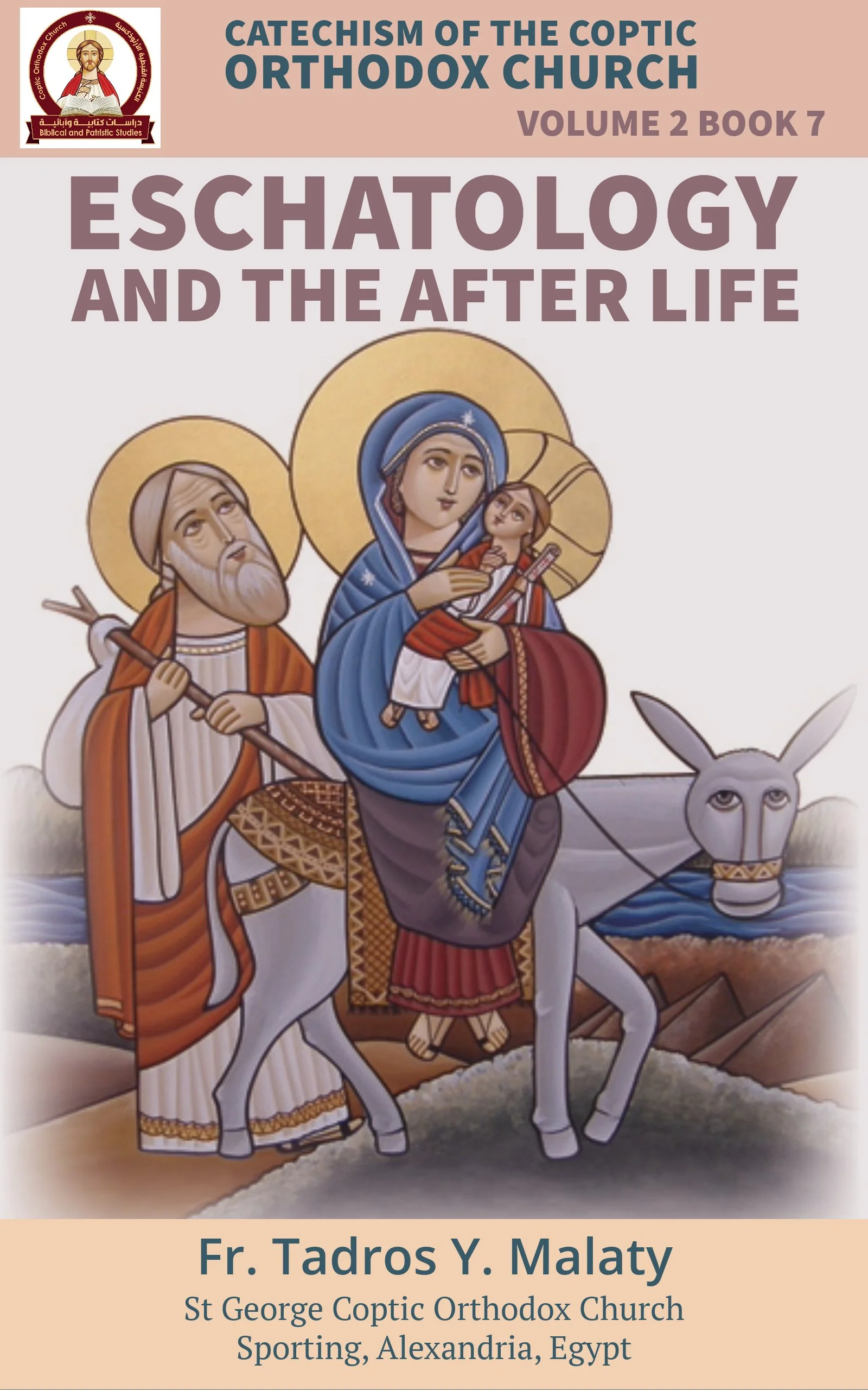
Catechism of the Coptic Orthodox Church - Volume 2 Book 7: Eschatology and the After Life
The book addresses questions about the following topics:
The Gift of Death and the Resurrected Life in Christ
The Sacred Pain of Loss
Millennialism (Chiliasm)
The Two Comings and the Rapture
The Final Judgment
The Resurrected Body
Heaven and the Jerusalem Above
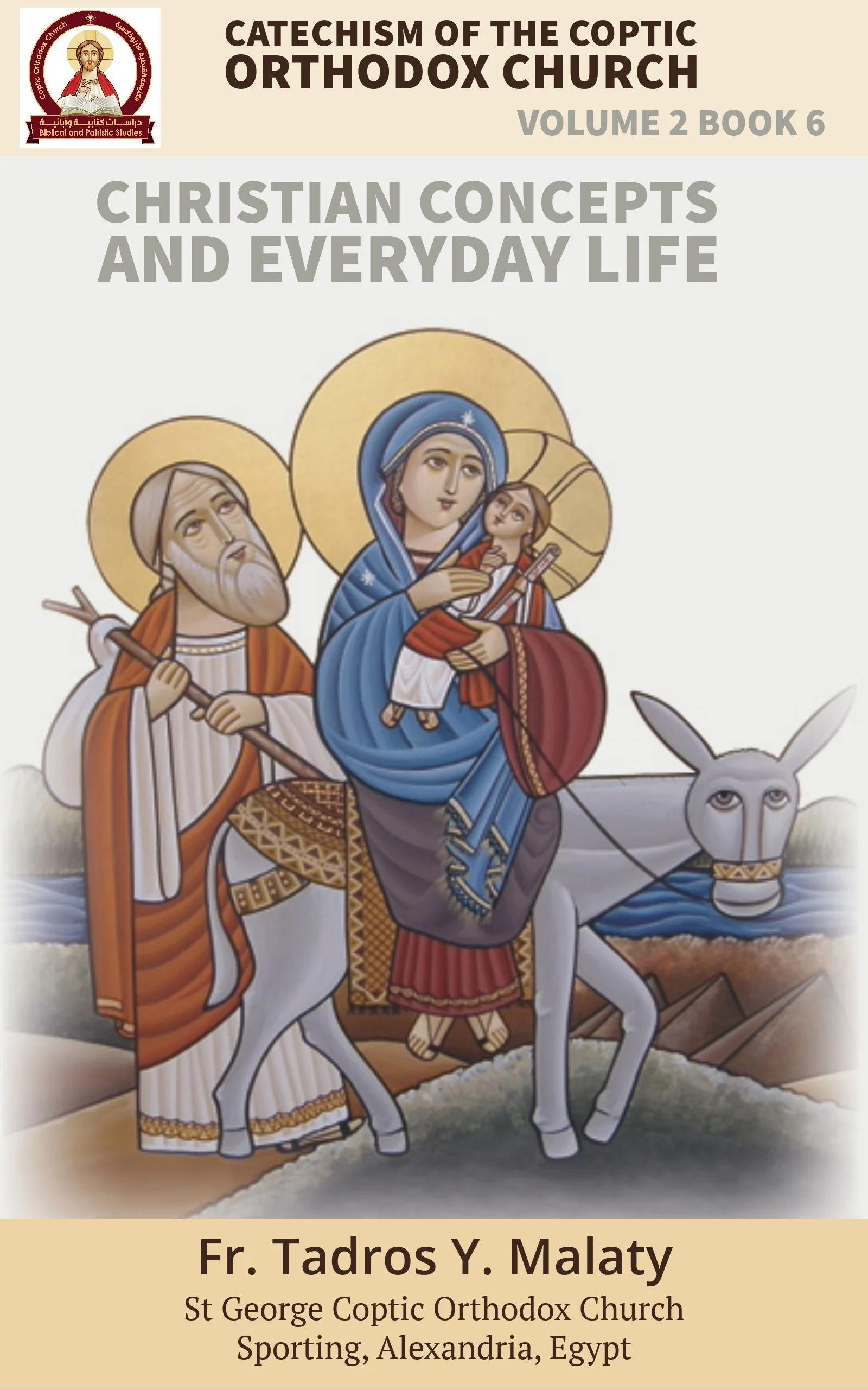
Catechism of the Coptic Orthodox Church - Volume 2 Book 6: Christian Concepts and Everyday Life
The book addresses questions about the following topics:
Christian Virtues
The Virtue of Discernment and Illumination
The Virtue of Obedience
The Virtue of Chastity and Purity
Vices or Evils
Christian Faith and Human Culture
The Relationship between Church and State
Christian Faith and Military Service
Christian Faith and Social and Familial Relationships
Social Cohesion
Christian Faith and Social Class
Christian Faith and Liberty
Wealth and the Wealthy in the Christian Faith
Science and Faith
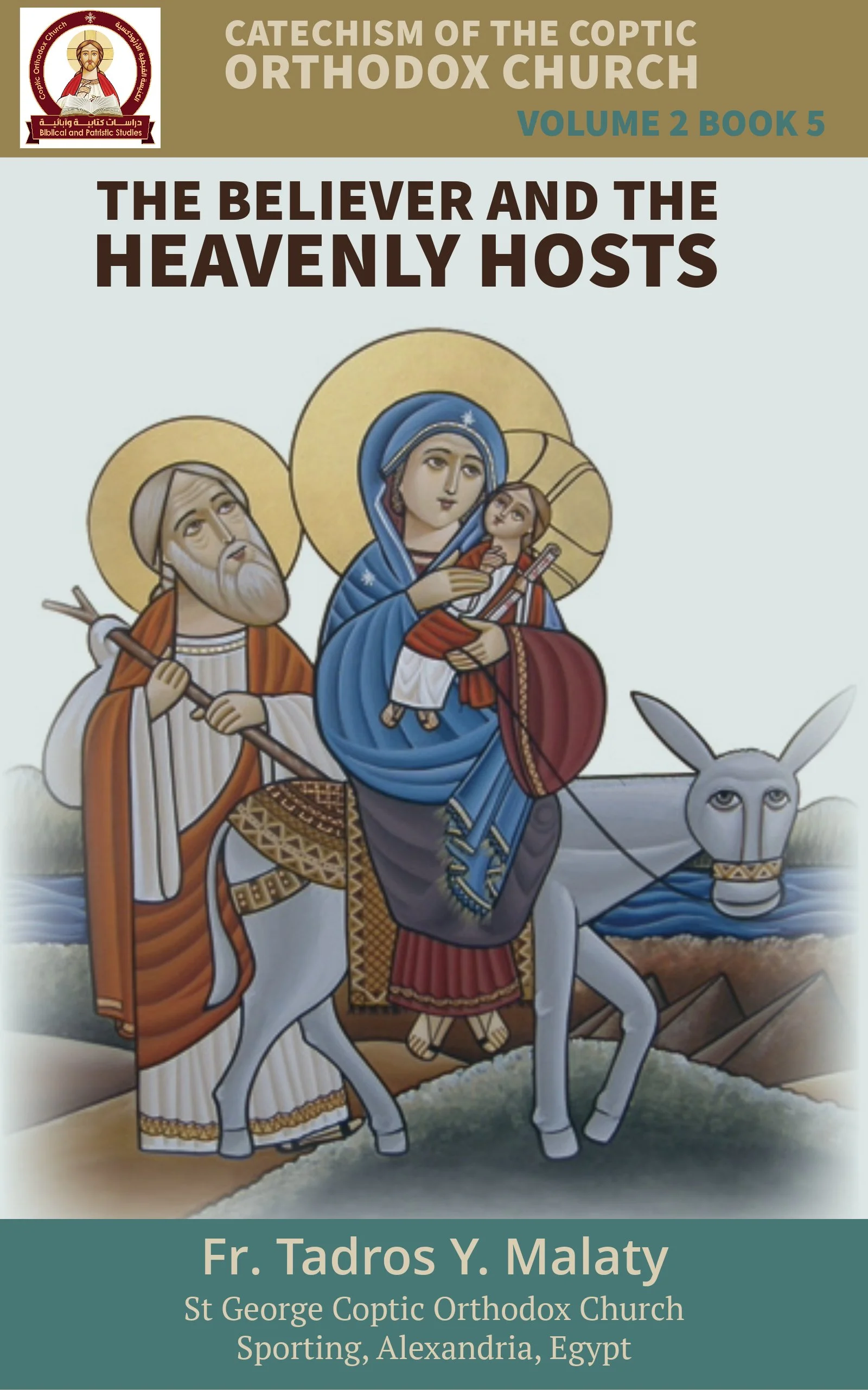
Catechism of the Coptic Orthodox Church - Volume 2 Book 5: The Believer and the Heavenly Hosts
The book addresses questions about the following topics:
1. The creation of the Spiritual World
2. Our Companionship with the Heavenly Hosts
3. The order of the Heavenly Hosts
4. The devil has no authority over us
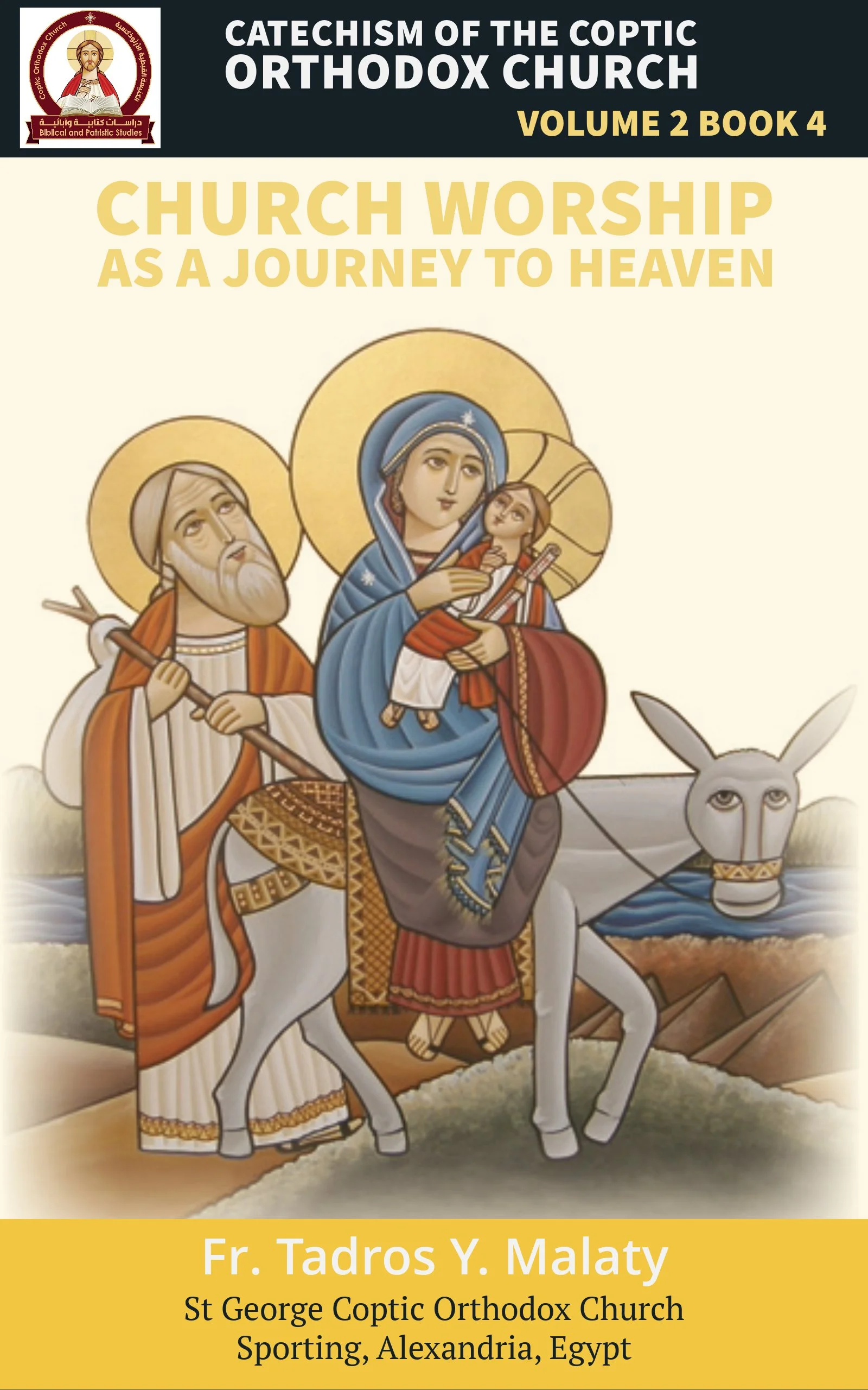
Catechism of the Coptic Orthodox Church - Volume 2 Book 4: Church Worship as a journey to Heaven
The book addresses questions about the following topics:
1. Church worship
2. The life of prayer
3. The Agpeya Prayers (the Canonical Hours)
4. The Model Prayer
5. Prayer of the mind and contemplation
6. The Jesus prayer or the Arrow Prayer
7. Metanoias and Prostrations
8. Holy worship and the Full Life
9. Worship and the Fear of the Lord
10. Holy Fasting
11. Worship and "Dying with Christ"
12. Tears in worship
13. Praise and the Heavenly Mindset
14. Church Hymns and the Heavenly Mindset
15. The Coptic Church Calendar and Joyful daily life in the Lord
Catechism of the Coptic Orthodox Church - Volume 1 Book 3: The Kingdom of God
The book addresses questions about the following topics:
1. The Church: The Kingdom of God
2. The Heavenly High Priest and the Church
3. The Church as a Heavenly Wedding Feast
4. The Unique Work of the Church
5. The Church: House of Salvation
6. The Eminence of the Church
7. The Church and Daily Renewal
8. The Church and Society
9. The Role of Women in Society and Church
10. The Person of the Church
11. The Mystery of the House of God
12. The Iconostasis
13. Coptic Art and Symbolism
14. The Holy Utensils
15. The Church Nave
16. The Church Belfry
17. The Holy Sacraments
18. The Sacrament of Baptism
19. On the Rites of Baptism
20. The Rites of Holy Baptism
21. The Sacrament of Chrismation
22. The Sacrament of Repentance & Confession
23. The Sacrament of the Eucharist
24. On the Main Features of the Coptic Liturgy
25. The Sacrament of Priesthood
26. The Sacrament of Holy Matrimony
27. Unction of the Sick
28. The Coptic Church and the Monastic Movement
Catechism of the Coptic Orthodox Church - Volume 1 Book 2: Christian Dogma
The book addresses questions about the following topics:
(a) The Creed of Faith and the Origin of the Canons of the Church
(b) Regarding the Coptic Orthodox Creed
(c) Exposition of the Creed
Faith in God and Our Knowledge of Him
The Holy Trinity
The Wondrous Creator, the Guardian of the World
The Exalted Nature of the Human Creation
Divine Providence
Divine Grace
The Fall of Humanity
Our Lord Jesus Christ, Savior of the World
Titles and Names of the Savior that Witness to the Works of His Love
The Holy Spirit and Divine Salvation
Catechism of the Coptic Orthodox Church - Volume 1 Book 1: Introduction to the Coptic Catechism
That is the first book of the Coptic Catechism series; the series consists of seven books:
Egypt that is Within Us and the Open Heavens
(a) Catechism
(b) The Coptic Catechism Through the Ages
The Basic Principles of Catechism
Faith That Works Through Love
The Holy Bible
Holy Tradition
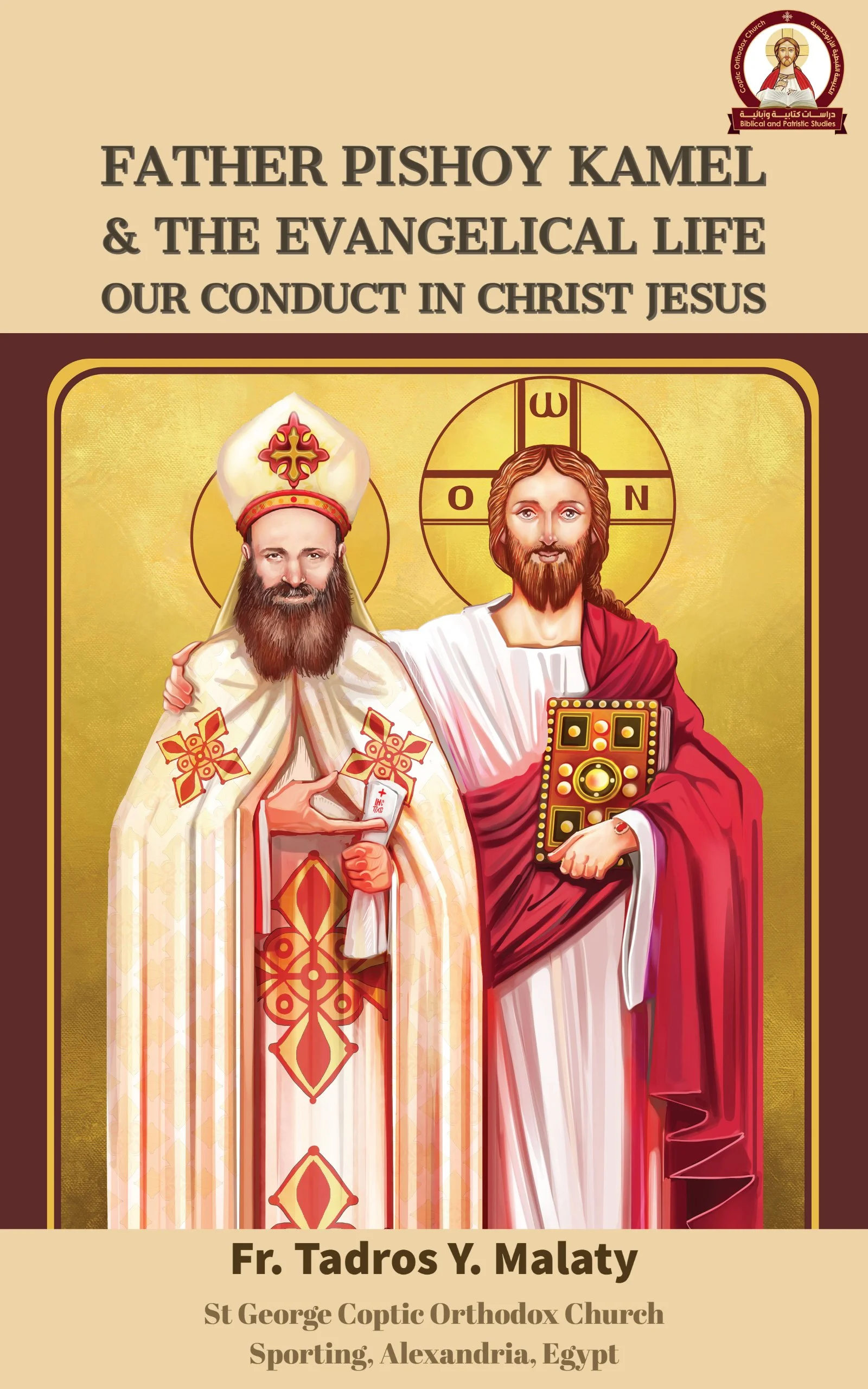
Father Pishoy Kamel & the Evangelical life: Our conduct in Christ Jesus
This book is the product of collected from a few articles issued after the passing of Fr Pishoy after reviewing and adding to it.
A Life of growing in the Lord for a Contemporary Priest
My God allowed me to meet the blessed brother Sami Kamel Ishak (Abuna Pishoy Kamel) in 1953 AD at the beginning of my university studies in Alexandria. At that time, he was a servant in the Church of the Virgin Mary in Muharram Bey.
Sami Kamel was characterized by an open, loving heart with wisdom, accompanied by a simple life. His virtues and spiritual abilities were apparent to all who met him, and his personality was attractive to believers and unbelievers.
After his ordination as a priest at St. George the Martyr Church, his star shone more and more, especially after he departed from this world. Death did not conceal him, but we felt his prayers and intercession before God in Paradise. I am not exaggerating if I say that many of those who met him and participated with him in the service still feel that he is closer to them than he was among us, whether in his youth or his priestly service, in Egypt or the diaspora.
Fr. Tadros Y. Malaty
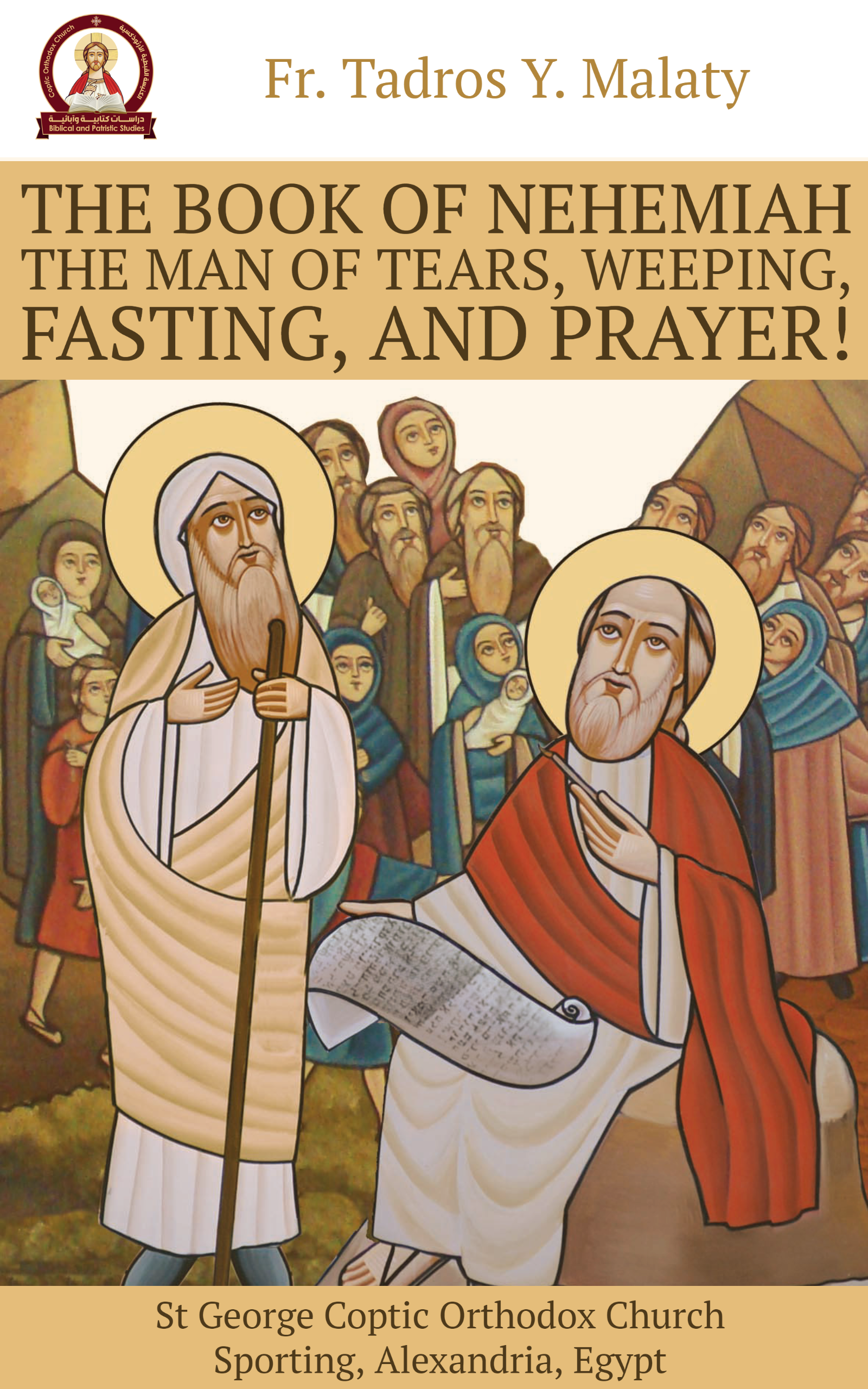
The Book of Nehemiah: The man of tears, weeping, fasting, and prayer! (Bible stories for kids 16)
A long time ago, Nebuchadnezzar had destroyed the temple of the Lord in Jerusalem and had destroyed the city and its walls. The Samaritans and the opposing gentiles found destroying the walls an opportunity to enter without resistance from its inhabitants. God has allowed that to chastise His people for a time.
Also, God ordered Cyrus, the king of Persia, to return the Jews from captivity and build the temple. So He sent Zerubbabel and all the Jews who wanted to return, and they started putting the foundation of the temple; however, the enemies opposed them, but finally, it was built.
After that, King Artaxerxes, the king of Persia, allowed Ezra, the priest and the scribe, to lead the second group, teach the Law to the people in Jerusalem, and start a spiritual reform for them.
After approximately thirteen years, the same king allowed Nehemiah to lead the third group from the returning Jews to build the walls of Jerusalem.
In His great love, God permits that His people go through tribulations, but then He grants them success when they repent and return to Him. Didn’t you hear about Nehemiah how he cared to build the walls of Jerusalem, the city of God? My heart does not stop to cry to the Lord, saying: “The walls! The walls! Who can build it and sanctify it except You!”
Tonight, I will tell you a lovely story about Nehemiah.”
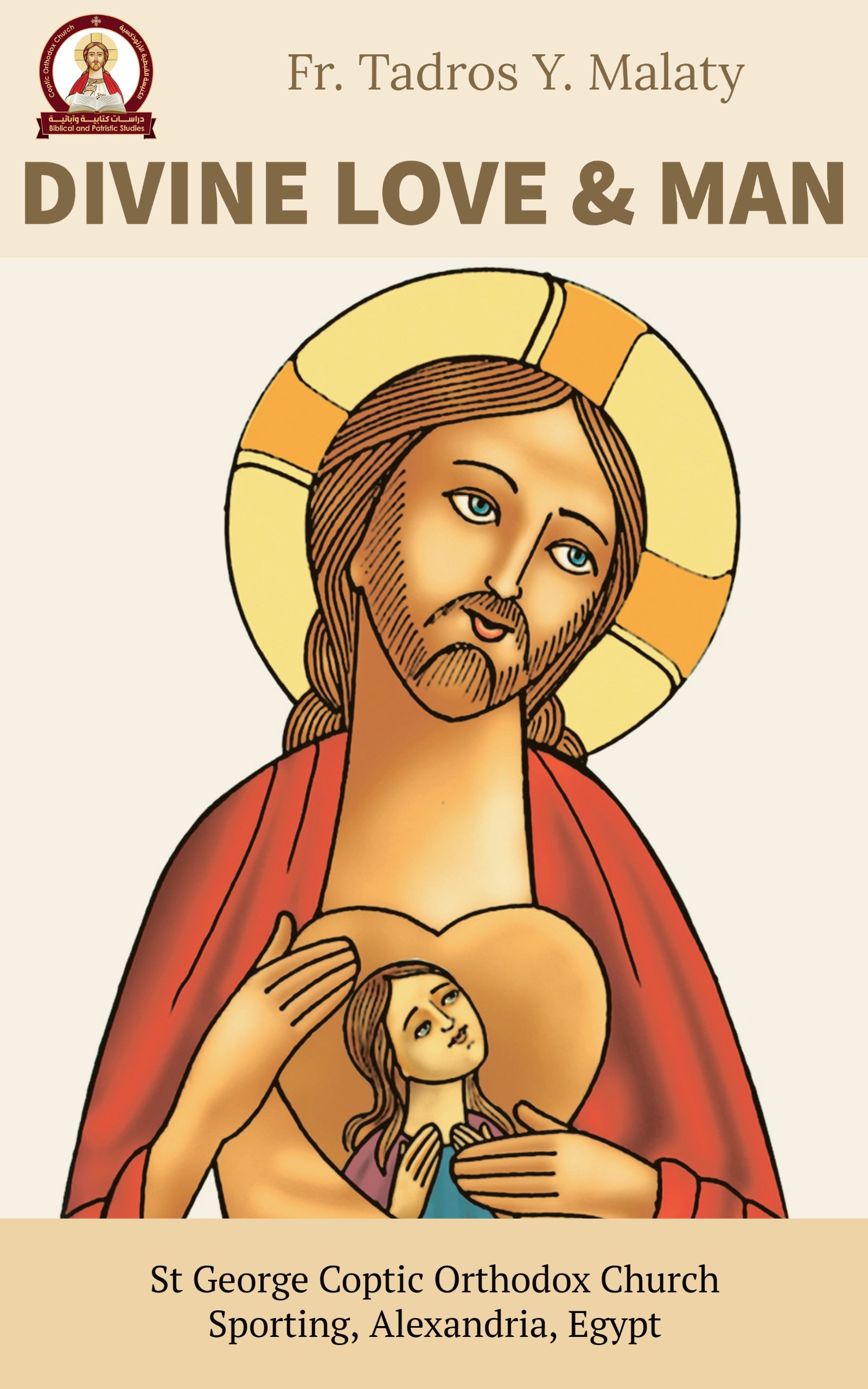
DIVINE LOVE AND MAN
I dare to talk about Divine Love, to find myself talking about 'God' Himself, because "God is love" (1 John 8:4). Thus, I challenged myself to write about matters of which I do not deserve to speak. There are no human languages, not even angelic, capable of explaining it, for no one knows Godly affairs except the Spirit of God (1 Corinthians 2:11).
Let the Spirit of God help us to feel His presence in the depths of our hidden hearts and to open our eyes in recognition of the dimensions of unlimited Divine love.
These dimensions cannot be expressed in words or letters nor measured by any standard. Even the movements of the heart could drown in the depths of this love and become drunk, losing control and awareness. As Paul, the Apostle said, "That you, being rooted and grounded in love (i.e., in God), may be able to comprehend with all the saints what is the width and length and depth and height - to know the love of Christ which passes knowledge; that you may be filled with all the fullness of God" (Ephesians 3:18-19).
Fr. Tadros Y. Malaty
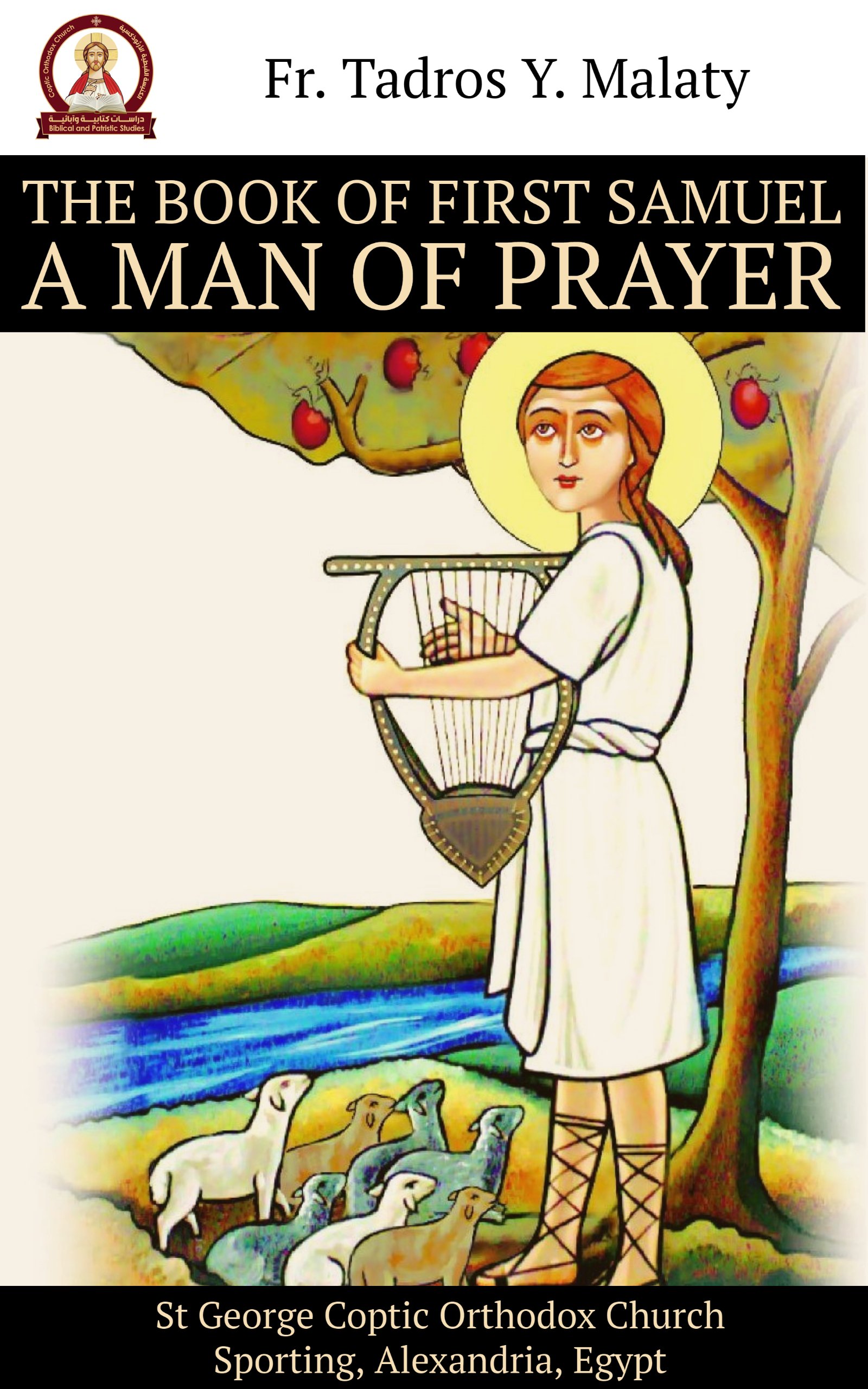
The Book of First Samuel: A Man of Prayer (Bible stories for kids 9)
To our Beloved sons and daughters
What do you know about the book of First Samuel?
The subject: Appointing a king over Israel. In the beginning, God was the king. God sent them judges when they went astray, but the people asked for a king like the other nations.
The topic of this book: Samuel was the fruit of his mother’s prayers, and Saul was the fruit of the persistence of the people, not the fruit of prayer. King David was the fruit of the prayers of Samuel the prophet.
+ This is considered a topic about the fruit of prayers.
+ The beginning of choosing a king, that is why we find for the first time the expression “The Lord of hosts.” (1:3). After the king was anointed, we hear “the horn of His anointed”. (2:10)
+ Pointed out the work of the Holy Spirit: the giver of the prophecy. (10: 6), and the One who grants a new heart (10: 9), the holy zeal (11: 6), and the keeper of man from evil spirits. (1:14)
The Parts of the book:
Samuel: chapter 1 - 7
Saul: chapter 8 – 15
David: chapter 16 - 31
Fr. Tadros Y. Malaty
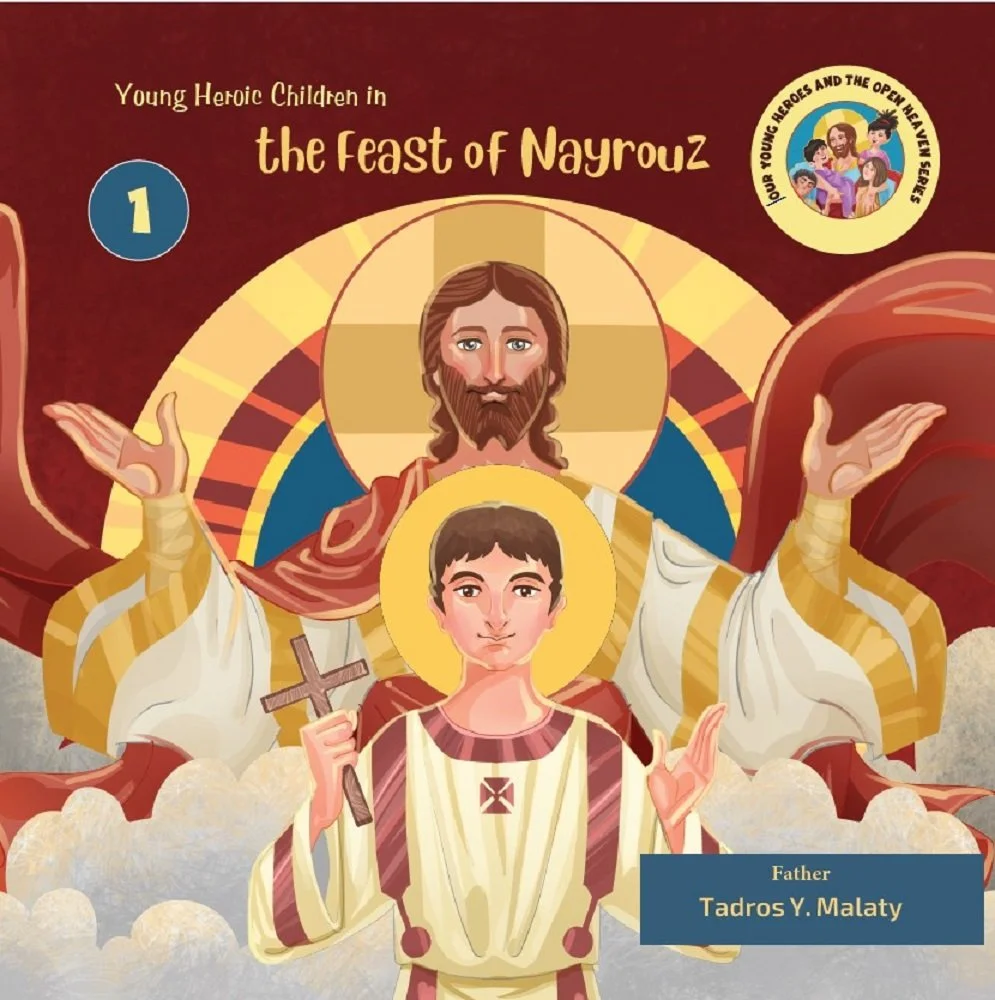
Young Heroic Children in the Feast of Nayrouz: Our Young Heroes and the Open Heaven Series
I thank You, My Lord Jesus, O You who genuinely loves children.
You became a child that I may experience You being a wonderous friend!
When You entered Jerusalem, the infants and little children rejoiced and were praising You without anyone teaching them.
For my sake You were crucified, allow me to kiss Your wounds!
How joyful were the angels with the martyrs, especially the little children among them!
Satan and his evil angels were envious, since they were banished from heaven, while we became like righteous angels!
We await Your coming on the clouds that we may also join the procession of the children of Bethlehem the martyrs!